
AVF Welcomes leading expert Prof. Stefan Streif to its Scientific Advisory Board
AVF is pleased to announce the news of Prof. Stefan Streif joining the AVF Scientific Advisory Board.
“AVF Board of Directors cordially welcomes Prof. S.Streif. We are honored to have Prof. S. Streif in our Advisory Board and University of Chemnitz as a new member of AVF. His outstanding expertise in the field of AI, digital modeling will help to optimize complex systems and strengthen AVF’s role in science and build a bridge to industry.”
About Prof. Stefan Streif
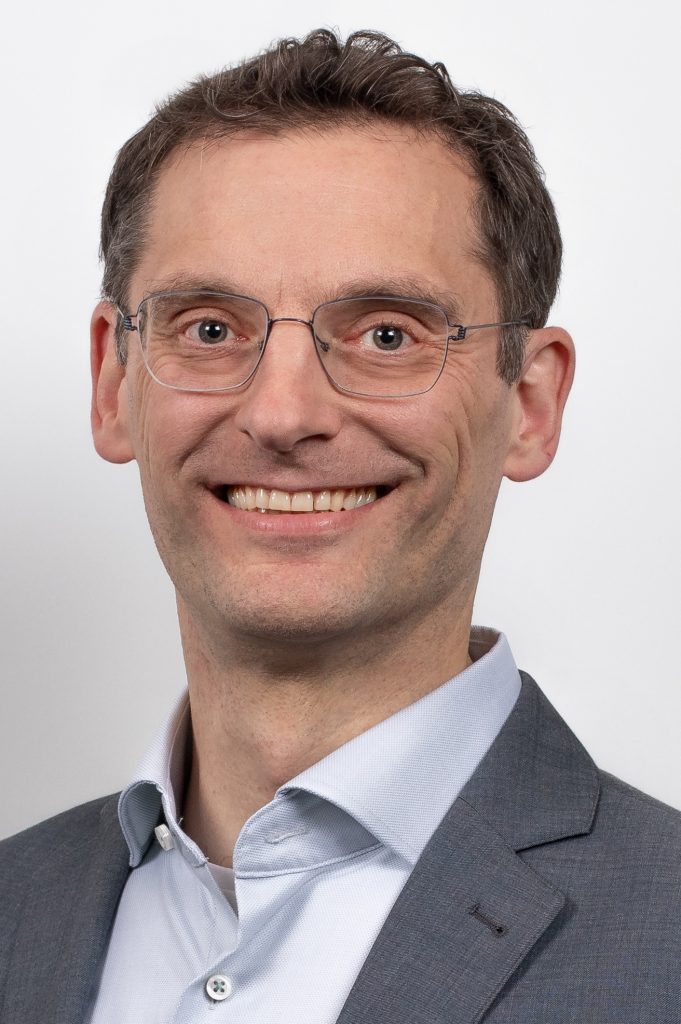
Background and Current Role
Prof. Dr. Stefan Streif studied Engineering Cybernetics, with majors in control engineering and bioprocess engineering, at the University of Stuttgart (Germany) and University of Sheffield (UK). In 2011, he obtained a Ph.D. from the University of Magdeburg (Germany). During his Ph.D. time he also worked at the Max Planck Institute for Biochemistry (Martinsried, Germany) and the Max Planck Institute for Dynamics of Complex Technical Systems (Magdeburg, Germany). During his Ph.D. time he also worked at the Max Planck Institute for Biochemistry (Martinsried, Germany) and the Max Planck Institute for Dynamics of Complex Technical Systems (Magdeburg, Germany).
In 2015, Stefan Streif became a Full Professor for Automatic Control and System Dynamics at the Chemnitz University of Technology (Germany). From 2019-2025, he has also been Dean of the Faculty of Electronic Engineering and Information Technology.
In 2023 Prof. Dr. Stefan Streif became a member of the Fraunhofer-Institute for Molecular Biology and Applied Ecology, Section Bioresources (Gießen, Germany) as well as a member of the steering committee for Controlled Environment Agriculture of the German Agricultural Research Alliance (DAFA).
Key areas of expertise: Professor Streif’s research interests include control, monitoring, machine learning, and optimization for complex systems. His work is both theoretical and application-oriented with a major focus on sustainable food production, controlled-environment agriculture (CEA), bio-based production, and energy systems.
At the AVF Summit held in Munich over the 3rd and 4th of September 2025, Prof. Dr. Stefan Streif presented the latest research on using Digital Twins in Vertical Farming and Controlled-Environment Agriculture. The presentation explained the approach of his group to develop and use process models for various monitoring, control and optimization tasks in indoor farming. He also pointed out that it is easy to define the tasks, but difficult to realize due to complexity (and possible coupling) of the production systems!
Significant achievements, publications, or contributions to the field
- Predictive models and digital twins for production of various organisms including plants, algae, fish, and insect larvae.
- First comprehensive predictive model of the coupled production of plants, insects, and fish and their synergistic optimization for improved energy and resource usage.
- Software / AI-sensors for estimation of quantities and elements in CEA and indoor farm that are difficult to measure non-destructively and online (like e.g. biomass).
- Adaptive, robust optimal control in combination with deep reinforcement learning and economic optimization, which allows the control of complex indoor farming systems.
- Interpretable AI and language interface for advanced automation systems enhancing greenhouse and CEA production management.
- Optimization of industrial bioproduction processes and nutrient recirculation systems.
What is your vision or commitment to contributing to the field through AVF?
“So far, AVF is, as I see it, focusing on plants. Since indoor farming suffer from high costs for energy and resources, we need to find solutions to improve efficiency and economic feasibility. The coupling of plant production with other production systems can affect and increase resource and energy efficiency significantly because waste and residues but also excess heat from one production system can be reused in another. A prominent coupling is aquaponics in which plant production is coupled with fish production. But more complex multitrophic systems involving algae, insects, or mushrooms prove to be very promising – these are the kinds of systems I am working on in various projects.
The coupling of such systems is what happens in natural ecosystems, where no resources are wasted and systems constantly adapt. In this sense, my vision for AVF is to create a sustainable artificial production ecosystem in which resources are never wasted and to make the technologies economic and ecological feasible.
While offering many benefits, coupled production systems also have drawbacks. As they are artificial systems that are not inherently stable or efficient, as they are in nature, these systems need to be closely monitored, controlled and constantly optimized. The methods and tools required for this are what I can bring to AVF, complementing other areas of experience, expertise and research. We have demonstrated that methods and tools based on mathematical models, digital twins, optimization algorithms and artificial intelligence are key to making the industry efficient and competitive. This is because saving resources and energy, reducing maintenance cycles and optimizing the harvest all reduce costs.
Another topic I find particularly interesting is the relationship between human operators and automation systems. Humans need AI and digital tools to manage indoor farms effectively. It is important to investigate how the operation of the automation system and its intricate internal functionalities can be made transparent to users in order to build confidence and trust.”