Wageningen University & Research and Utrecht University have published the following press release on a vision for fruit production without plants.
Tomatoes that grow without a plant may sound like science fiction. Yet researchers at Wageningen University & Research and Utrecht University are exploring how it could become reality. The concept could transform food production and make it more sustainable and resilient. The team has published its vision in the leading journal Trends in Biotechnology.
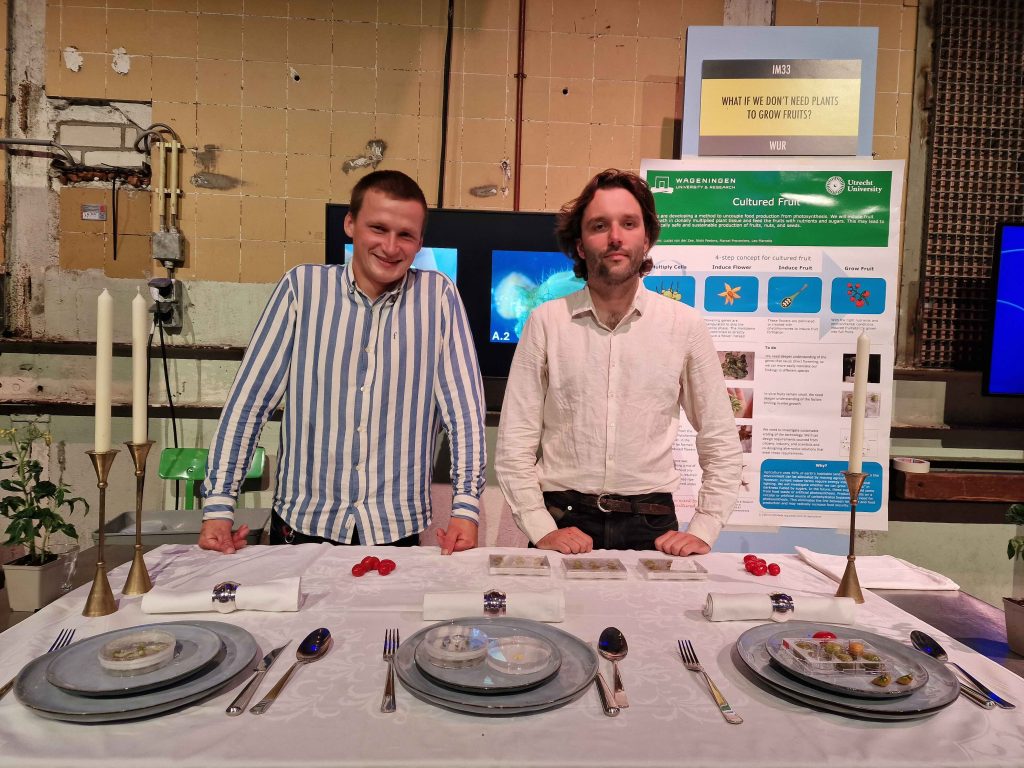
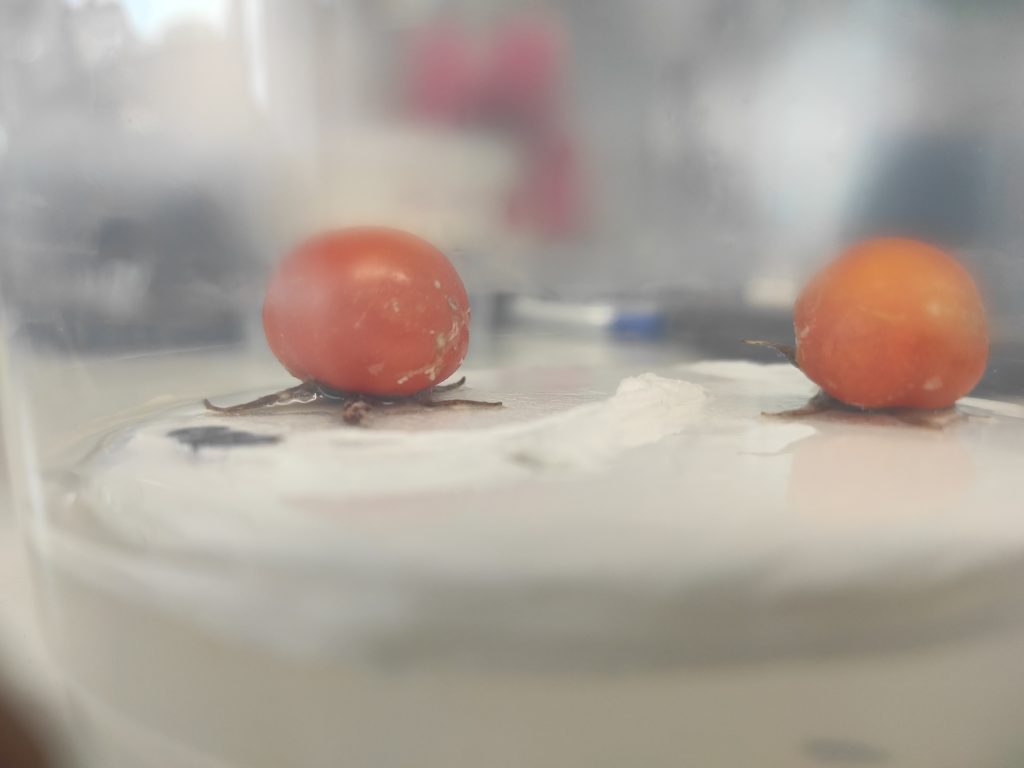
It starts with something very small: a seed or a piece of leaf. With the right signals – activating the genes that trigger flowering – that starting material develops into a flower bud. As in nature, the flower can be pollinated, or in this case artificially induced to initiate fruit development. Instead of drawing energy from sunlight, the plant-free fruit grows on a carbohydrate-rich nutrient solution.
“If we can produce fruits in factories rather than in fields, we could shield part of our food supply from the impacts of climate change,” says Lucas van der Zee, PhD candidate with the Horticulture and Product Physiology group at Wageningen University & Research. “It would also mean we need far less land to grow food.”
While individual steps in the process are already described in the literature, the authors now bring them together for the first time in a single theoretical framework. At Utrecht University, co-author Niels Peeters is working on the crucial step in which the starting material develops from a cell into a flower bud. In Wageningen, researchers are investigating how a flower bud develops into a mature fruit. Small fruits, big questions
Utrecht University, co-author Niels Peeters is working on the crucial step in which the
starting material develops from a cell into a flower bud. In Wageningen, researchers
are investigating how a flower bud develops into a mature fruit.
Small fruits, Big questions
The researchers are optimistic about the possibilities, but stress that the concept is
still at an early stage. The first fruits grown in this way remain small, and production is
far from sustainable. If ordinary sugar is used to feed the fruits, the environmental
benefit is offset by the extra farmland needed to produce that sugar. One potential
solution is the use of CO₂-derived acetate, the main component of vinegar. This
involves reacting CO2 with water while applying an electric current. Co-author Robert
Jinkerson of the University of California is studying how plants can use acetate for
growth – an important step towards a future in which food production requires hardly
any land.
Societal and Ethical choices
Alongside technical issues, the researchers raise social and ethical questions. “Fruits
are more than just a consumption product. How we make, eat and share food helps
define who we are,” says Van der Zee. “We believe that it is important that people
have a say in how their food is produced.” Together with philosopher and co-author
Zoë Robaey of Wageningen University & Research, who studies the ethics of
biotechnology in agriculture, the team is also exploring questions around ownership,
access to technology, and the role of farmers and breeders.
“We want to make the knowledge we develop freely accessible, so people around the
world can help shape what cultivated fruits should look and taste like,” Van der Zee
concludes.
Event Announcement – Join us on the AVF Webinar – Vision for Fruit Production without Plants on Monday February 16th @ 4pm CET
If you are keen to learn more about this concept then AVF are hosting a webinar with Lucas van der Zee titled Vision for Fruit Production Without Plants – A Game Changer?! on Monday 16th February at 4pm CET. Bring your questions for Lucas and book your tickets here.
Follow www.linkedin.com/in/lucasvanderzee for updates on progress.